Customer spec
- Reinforced
Two product lines
Materials selected for part structure and operating conditions, covering requirements such as appearance, toughness, heat resistance, flame retardancy and recycled content. See each grade's data sheet and test report for its properties.
28 grades · 11 material families
FDM filament in five groups (Appearance, Everyday Functional, Engineering, Flexible, Support) covering PLA, PETG, ABS, ASA, TPU, PC, PA and fiber-reinforced materials, plus photopolymer resins. PPS, PEEK and PEKK filaments are planned.
39 products · 6 product groups
Three finishes. One diameter. Matte, silk and carbon fiber, all 1.75 mm. All filaments
Shown above: GREENPOLYMER's technology in use today, and the AI-upgraded production line it is building.
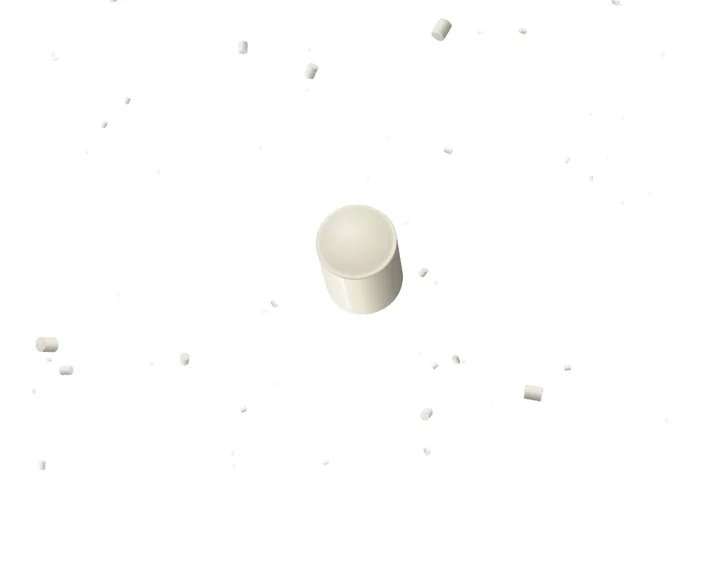
One pellet It all starts with a single pellet. In useJiangxi Production Headquarters is a listed production site on a GRS 4.0 scope certificate held by our international headquarters, Green Polymer PTE. LTD, covering post-consumer recycled PP, ABS, PE, PC, PET, PA and PBT pellets; recycled feed is pre-processed with invention patent ZL 2022 1 0635961.4.
AI lineEvery incoming lot is identified by NIR and auto-sampled for melt flow, moisture and ash; a model compares it with that supplier's history, holds any outlier and releases the rest to stock automatically.
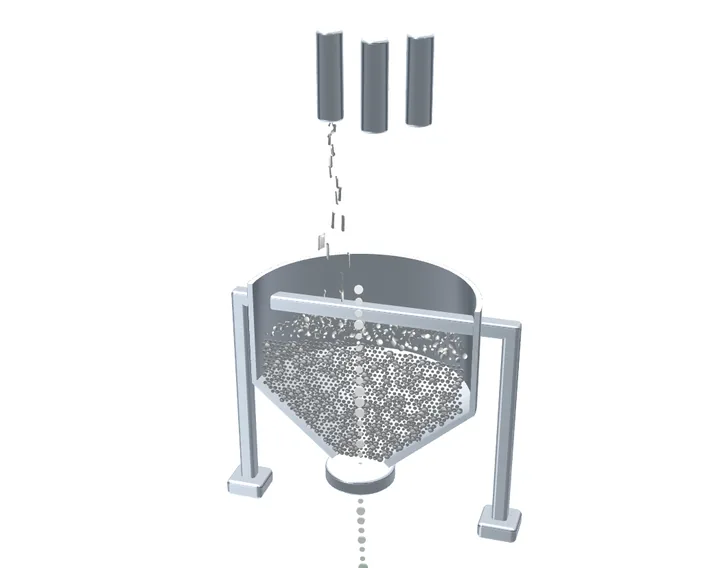
Formulation and color Formulated to the customer's spec: base resin, reinforcement, flame retardancy and color. In useDosing and processing are managed by our own registered software, the silicone flame-retardant PC production control system V1.0 (2024SR0275054).
AI lineGravimetric feeders dose every component in closed loop and log it second by second; a model trims the recipe to the measured inputs so every batch lands in the same property window.
AI lineA spectrophotometer measures ΔE against the customer's target and a model computes the masterbatch correction, cutting trial rounds; production starts after first-article approval.
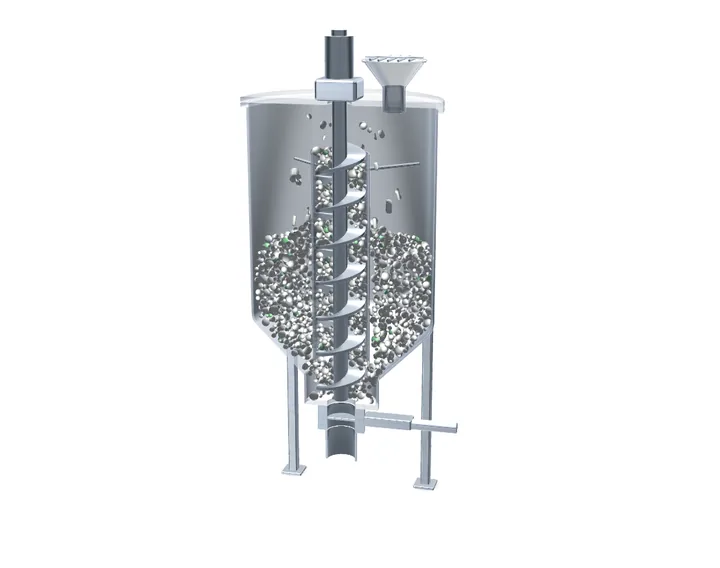
Mixing The powder is premixed in a high-speed mixer, then blended slowly with the base resin and masterbatch in a vertical screw mixer. AI lineThe mixer's current curve tells when the blend is done, not a stopwatch; each batch is scanned to its input lots, so every spool and every bag traces back to every incoming bag.
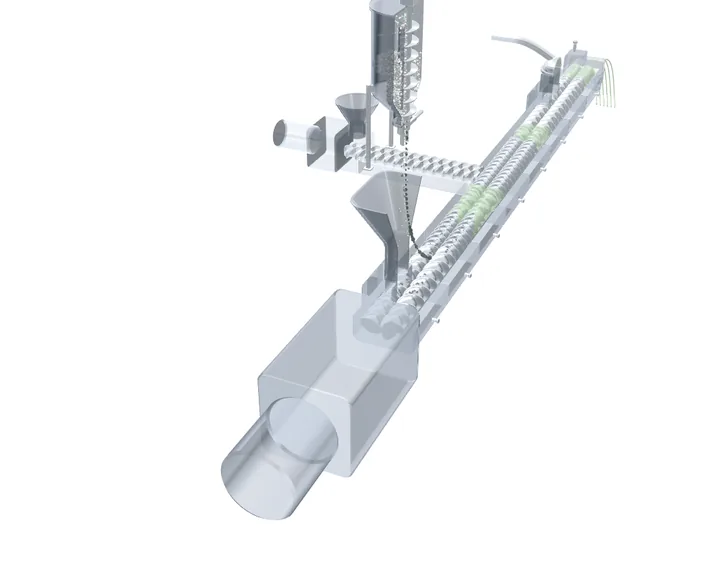
Melt extrusion Melted in a twin-screw extruder, then reinforced with glass fiber fed in from the side. In useApplies invention patents ZL 2025 1 0525736.9 (fiber-reinforced flame-retardant plastic) and ZL 2025 1 0522728.9 (halogen-free flame-retardant compound); process data is captured by our registered real-time data acquisition system V1.0 (2024SR0275057).
AI lineZone temperatures, torque and melt pressure stream into a model that flags drift before it becomes a defect and proposes the correction; every batch leaves with its full process curve.
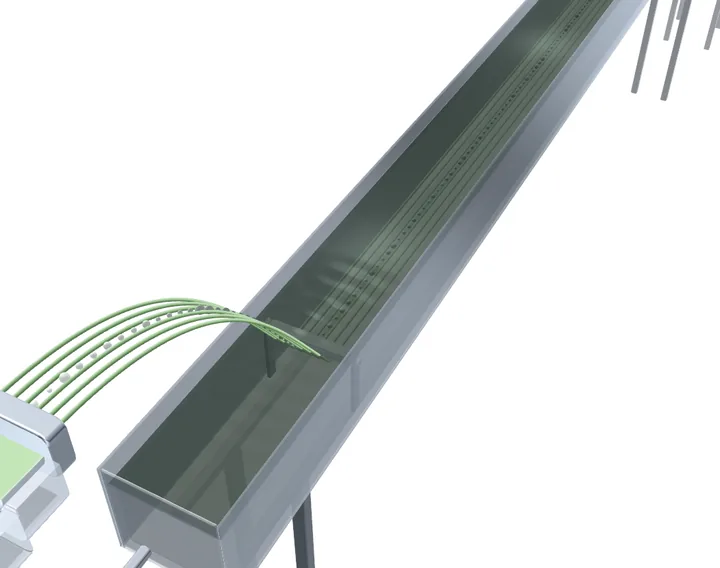
Strand cooling The extruded strands cool and set in a water bath. AI lineWater temperature runs in closed loop and haul-off follows throughput, so strands stay even and pellets come out uniform.
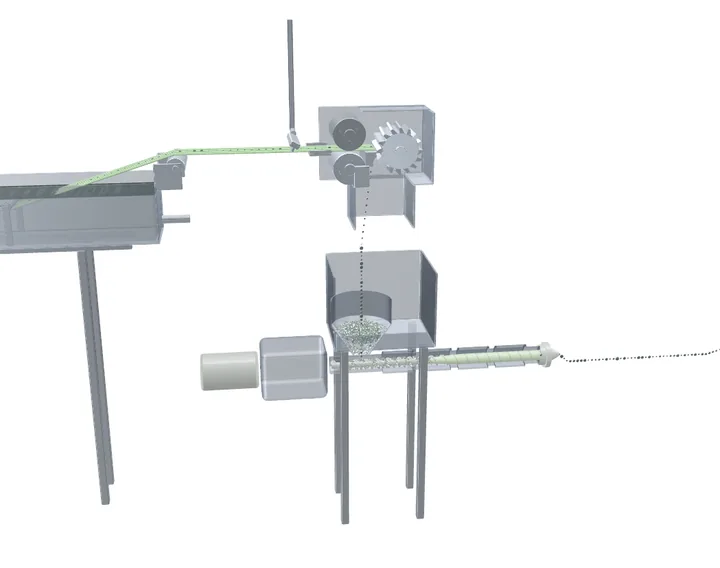
Pelletizing An air knife dries the strands, and the pelletizer cuts them into pellets of equal length. In useGreen Polymer Technology (Jiangxi) is certified to IATF 16949:2016 (design and manufacture of plastic pellets) and ISO 9001 / ISO 14001 (production of plastic pellets); testing runs on our registered material performance analysis software V1.0 (2024SR0275050).
AI lineInline vision checks every pellet for shape, color and specks and diverts rejects; each batch is retained and tested, the report ships with it and is searchable by batch number.
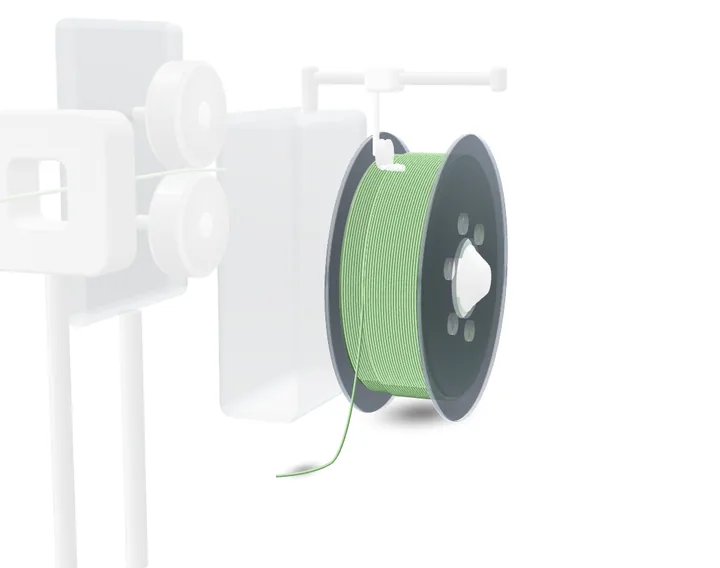
Filament The pellets are then extruded into 3D printing filament and wound, turn by turn, onto a spool. In useRecycled PET filament applies invention patent ZL 2025 1 0518687.6 (high-strength recycled PET composite); filament is wound on 100 % post-consumer recycled PC spools, listed in the product appendix of the 2026 GRS scope certificate (holder Green Polymer PTE. LTD).
AI linePellets are dried and moisture-checked inline; a laser gauge closes the loop on diameter and archives the whole spool's trace; every spool carries a batch code that opens its material lots, process curve and test report.


Two product lines
Materials selected for part structure and operating conditions, covering requirements such as appearance, toughness, heat resistance, flame retardancy and recycled content. See each grade's data sheet and test report for its properties.
28 grades · 11 material families
FDM filament in five groups (Appearance, Everyday Functional, Engineering, Flexible, Support) covering PLA, PETG, ABS, ASA, TPU, PC, PA and fiber-reinforced materials, plus photopolymer resins. PPS, PEEK and PEKK filaments are planned.
39 products · 6 product groups
Three finishes. One diameter. Matte, silk and carbon fiber, all 1.75 mm. All filaments
From a single pellet to a spool of filament.
Process scenes illustrate common industry practice. Readouts are not measured data.
Shown above: GREENPOLYMER's technology in use today, and the AI-upgraded production line it is building.
The story moves from the building into the workshop, then follows one pellet through the compounding process. The batch is weighed to the customer's spec, and the color is yours to mix. The powder is premixed at high speed, then blended slowly with the base resin and masterbatch. A twin-screw extruder melts the batch and reinforces it with glass fiber. The strands cool in water and are cut into pellets of equal length. Finally, the pellets are extruded into 3D printing filament and wound onto a spool. Process scenes illustrate common industry practice.